Monday, February 18, 2008

Knight Rider

KITT...the original

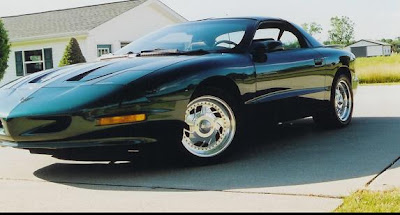
This past Sunday, an old tv show made it's remake debut, Knight Rider. Well, it was actually a two hour movie, to test the waters to see if there was enough interest in a modern reincarnation of the black car and cheezy supporting cast back to tv. Gone is the black Firebird known as KITT from the original, though a keen eye may have spotted the first car's TPI engine in the garage during one scene. The Pontiac Firebird ceased to exist as of the 2002 model year, so they couldn't call upon a Poncho to star in the car role this time around.


KITT...the next generation

I have to say, I was skeptical when I saw that a Ford Mustang would be the replacement. After watching the car in action, I feel the car packs plenty of punch and is a worthy car to fill the shoes of the old KITT. After all, it is the 500 hp Shelby GT500KR, and the hood scoop accepts the red flashing lights without missing a beat. David Hasselhoff made a quick appearance at the end, pretty much to tell the new star that will assume his former role that he is actually his father. Who knows why he wasn't a part of the kid's life, but I assume it's because he was too busy spraying his hair with Vidal Sassoon, picking up chicks, and cruising his bird lookin' for bad guys.

Nearly 13 million viewers tuned in to watch the remake, enough that it looks like a series will be made. Fear not, this series will be as cheezy as the one that ran from 1982-1986. Yet like the first, the car will be the star of the show, and likely will be enough to keep the showing going for another few year run like the original. Personally, I'm glad to see it back. Bad acting and all, it's hard to argue the entertainment value of a high powered car doing all the stupid shit we'd like to go out and do in our own cars.

When shopping carts attack!

On Friday, after arriving home from work, I decided to go and take my car for it's much overdue hand wash. I parked my car out front while I ran into the house to unload some things, and grab my shirts for the dry cleaners. It wasn't until I was ready to leave that I noticed the damage.

First reaction when I saw my passenger side fender? "Who the fuck hit my car?!?!?!" I was so pissed off, as I felt I had been a victim of a parking lot hit and run, one in which did a fine number on my car. Then, when my girlfriend came out to the car, she noticed there was also damage on the door. I then started to try and recreate the scene in my head, and I kept coming up blank. I couldn't envision any possible scenario where my car could be smashed in the manner it was, at least not by another vehicle. Plus, there was no paint from another car present. Thinking back, another possibility jumped into my mind, the Meijer parking lot last Sunday.

The weather was bitter ass cold, like 0 degrees with a a -15 to -20 degree windchill factor. In addition, there was a high wind advisory with 50 mph gusts, enough to pack a major wallop with a shopping cart. When we returned to the car after getting our groceries, I found three carts positioned against the side of my car. It was dark, my hands were burning they were so cold, and my car was filthy. At the time, I didn't see any visible damage. Yet now, I was quickly becoming more and more convinced that this was when the carnage took place.

After I hand washed the car last Friday, better revealing just how bad it was, I took a trip up to another local Meijer. I wanted to know for sure, and the best way to verify my theory was to match a cart up to the damage. It was immediately obvious, those three carts from nearly a week earlier were responsible. This being the first real good washing the car has seen in a long time revealed that it's getting to be time for a little TLC anyways. The stone chips on the rockers, wheel well, hood, and other areas are slowly giving way to rust. Right now, it's nothing extreme, but if it continues to be neglected, it will get real bad after a couple of more of our Michigan winters. The time to park it and begin a restoration is quickly approaching. With 131,000 miles on the odometer and 19 years of service, the car has already given it's fair share. Perhaps I'll shoot for 150,000 miles before I park it for both drivetrain and body improvements. It just pisses me off, as the body was very straight for the most part, and this damage is so bad that it may warrant replacing the fender altogether. If fucked up a few of the body lines pretty good.


Wednesday, February 13, 2008

It's a Jeep thang!

While out at Meijer a bit ago, I returned to my car to find this parked next to me. It always cracks me up when I see folks with 4x4's appear to bury their ride as deep as they can, simply for the thrill of trying to get it out when they go to leave. My first thought was "definately a Jeep thang!" I'll admit though, if I had a Jeep, I'd be doin' the same stupid shit.


Saturday, February 09, 2008

Tough Decisions Part 2 (Post-Supercharger Days).

And now the dramatic conclusion…

(If you didn’t read part one, scroll down a bit)

8. Supercharged 429. I ran across an ebay auction for a brand new BDS 8-71 setup for a BBF. It was a polished kit that included everything for $2600.

Advantages: Blower Motor (Need I say more?)

Disadvantages: No one makes an on the shelf forged low compression piston for a 429 so here comes a set of custom pistons ($$$). The engine is now a very heavy package even with aluminum heads (My poor engine stand!). Two carbs are needed instead of one (Goodbye respectable gas mileage as gallon per mile not miles per gallon is now the more effective fuel consumption measurement rate). A 4 speed Toploader can no longer handle the extra power plus blower motors don’t like the quick engine RPM changes that are normally seen in manual transmission equipped cars so an automatic transmission is now needed.

Blower motors make awesome low end torque so to take advantage of it a low RPM stall speed torque converter is needed, which needs to be custom built ($$$). Ford 8.8 rear end is no longer able to handle the power so a Ford 9 inch rear is needed (slightly less efficient in terms of power delivery but bulletproof, ohh and $$$). Bigger tires are now needed because the tires that can fit in a stock wheel well and a blown BBF just looks plain stupid (Mini-tub showing up on the radar for the first time). 4 bolt block, H-beam rods and custom cam now needed (Can you see this is when the speed bug really started to kick in?). Ohh did I mention all this costs money?

Bonus Info: This kits sells for $4345.50 direct from BDS.

WesleyJ Tip: Do NOT buy a supercharger off ebay without looking at it first!! The only reason why I bought this kit was because the seller was 30 minutes from me and I verified that the kit was indeed brand new BEFORE I bid on it.


9. Supercharged 429 but with a TH400 setup.

Advantages: Built proof transmission and fairly cheap.

Disadvantages: See 454 Chevy entry.


10. Supercharged 429 but with fully rollerized TCI Full Competition C6 automatic transmission. I got this for a great price off the www.460ford.com site.

Advantages: Easily able to handle the power.

Disadvantage: Heavy transmission, and sucks down more HP to run an automatic transmission compared to a manual transmission (although being a fully rollerized transmission this does cut down on the inefficiency a bit).


11. Supercharged 429 but with TFS Street heads. For the amount of money needed to get the A429 Cobra Jets up to par, I’d have a similar amount of money into some fully assembled TFS street heads.

Advantages: Same $$$ output but TFS heads flow are better.

Disadvantages: I don’t know what kind of valves, springs, retainers come on assembled heads and there are horror stories on the internet about the parts that come on those assembled heads.


12. Supercharged 429 but back to the A429 heads. I decided it’s best to stick with the heads I have and outfit them with the best valves, springs and retainers possible. Ported A429's are good heads, but it’s easy to get draw into the head flow numbers game.

Advantages: Solid heads + great parts = (hopefully) motor stays together.

Disadvantages: Not the latest and greatest head out there.

Bonus Info: Ported A429 heads are capable of taking a 460 in a fox mustang deep into the nines, so it’s a greed thing at this point.


13: Supercharged 429 but with the new Jon Kasse “affordable” Boss 429 heads coming out. All of the power of the Boss 429 heads but with updates to eliminate oiling issues, funky rocker arm designs and crazy pistons. Plus they will be “affordable” compared to full out race heads.

Advantages: Nothing says valve cover power like Boss 429 does!

Disadvantages: Not released yet, Pricey, no blower intakes, already bought custom piston (which could be used but would need new valve cutouts), plus Boss 429 in a Fairmont just doesn’t make sense.


14: Supercharged 429. Back to entry 12 and I’m sticking with it.

So what I’ve ended up with is a super expensive engine that will be “somewhat” reliable at best, while knocking down the absolute worse gas mileage that I could have ever dreamed of. Actually that’s not 100% true but I’ll save that for a different entry. The turning point was that I decided this car would be a limited use street car and not something I would drive to Ohio or work everyday. Plus I got bitten by the blower motor bug. I’ve been told by other guys who run blowers on the street is that the low end torque will ruin driving a naturally aspired street engine for you.

The point of this story is that it’s normal and a good thing to toss around a few different engine combo’s before you decide on one. Half of the fun is in deciding on what to build anyway.

Plus after I get sick of the all the inefficiencies seen in the Roots blower, the short block will easily be able to handle the duties of a 2 massive turbochargers…..

Peace
WesleyJ
Zephaniah 3:16

Monday, February 04, 2008

Crown Victoria: Police Interceptor

These past couple of days I've been participating in an Emergency Vehicle Operations course. At our disposal are Ford Crown Victorias, Police Interceptor editions. Going into it, I figured the driving itself would be awesome, though was skeptical of just how good a Crown Vic could actually handle and accelerate. Having spent a few days behind the wheel, I can honestly say that I have a new found appreciation for this last of breed car. The Crown Victoria will likely be the last car ever built in North America with a body on frame construction, and it seems likely that the cars days are numbered.

Day one, we had a clapped out 2000 model that had seen better days. That being said, it still handled damn well as you tossed all 4,000+ lbs into a curve at a good rate of speed. It was obvious that not only the suspension was showing it's age, but the engine as well, just didn't have the pep it should have. Day two, we actually started getting tested on our driving skills, and everybody used newer models. Our group was blessed with a 2005 model.

The 2005 showed off all of it's 250 hp from the get go, and took the curves much more nimble that our previous car, steering was nice and tight. This model also was equipped with standard ABS brakes, a feature that was also void on our first car, which made things interesting for our braking procedures yesterday while on slush/ice.

As for the driving itself, I grew up out in the country, where roads surrounded by nothing but fields, few intersections, and seldom policed by local law enforcement were the norm. This offered the opportunity to "test and tune" your car, as well as perfect many of your driving skills that you weren't taught in drivers education. Even so, it had been many years since I had pushed a car to the edge, and never had I been able to do so to the extremes we have during this course.

The training took place upon airport runways, courtesy of a suburban police academy, with the only obstacles you could take out being cones. A spin out at 50 mph, even into the grass as some did, was of little concern. Even though many of the objectives came easy to me, there were a few in which I'd never attempted. Perhaps the most fun being the high speed lane change. There is just something about kickin' the ass end of your car out at 50+ mph and adding a little counter steer to stabilize the car that put a smile on my face every time.

Though the cars weren't on par with my nearly 20 year old driver, in neither power or handling, it was still a fun time. Made me want to build a car specifically for road course racing. Not that I didn't before hand anyways, but now I've had just a taste of what actually racing would be like. Can't say I really would want to race around a track with other cars with my 69 Camaro, so perhaps my 89 Formula will be the sacrificial lamb, since it appears a newer 1995 Formula will be in my possession in the very near future. :)

Saturday, February 02, 2008

Tough Decisions Part 1. (Pre-Supercharger Days)

Few can argue that the most important decision anyone building a car can come to is deciding on what engine to run. The engine is by far the most defining feature of any car. Big block, small block, turbo, nitrous, aftermarket heads, etc the list goes on and on. I myself went through many different ideas before I focused in on a supercharged 429. I remember Supersport giving me a hard time for switching back and forth on what combo I wanted to run. Hey, it’s a tough decision – what can I say? Here is the list of what I went through.

1. 302. I wanted a built 302 with a 5 speed because it would be pretty fast, get decent gas mileage, and parts are a dime a dozen.
Advantages: Simple, cheap, light weight, easy bolt in, etc.
Drawbacks: Everyone has a "5.0"

2. Turbocharged 302. I have a pair of T-03s in my basement that fell off a late model Turbocoupe and 600-700hp is pretty easy.
Advantages: Lots of really cool exhaust fab work, and setting up the turbos. Very unique.
Drawbacks: Carb tuning a turbo setup can be very tricky.

3. Stock 460. I had a friend who had a stock 460/C6 in a Lincoln Continental with 70,000 original miles and had been babied all its life. Too bad the owner died and somewhere along the line the air cleaner got taken off it and mice jammed a bunch of stuff down in the engine.
Advantages: The guy only wanted $200 for the whole car (which had a C6 and 9” rear end), and who can argue with a Big Block.
Disadvantages: I didn’t want to rebuild anything at this time, and certainly not a stock 210hp (!) 460. I wanted to drop in a running engine. (I was trying to be economical about doing a Big Block swap!! HAHA).
Bonus info: Actually I came real close to taking this combo eventually because the price was dropped further but what stopped me was the rear brakes had locked up and I could not tow it easily.

4. 501 Stroker motor. I figured a balanced rotating assembly was the way to go and if I’m going to rebuild something I might as well get a motor over 500 cubic inches.
Advantages: Reliable, complete combo and somewhat cheap.
Disadvantages: Stroker kits started becoming all the rage at that time, and for some reason that didn’t sit well with me. Plus I was having a hard time finding the right combo of rods and pistons that I wanted. Gas prices were starting to rise and I was getting concerned how much would I drive something that got less then 10 mpg.

5. 302. I started contemplating this swap again because gas has risen to over $2.00 a gallon. I still wanted a car that I could drive to Cincinnati Ohio and not have to sell off my collection of junk silver or Kawasaki H2 Triple parts to pay for the amount of gas I was going to need to driving there.
Advantages and Disadvantages: See first 302 entry.

5. 454 Chevy. I contemplated this swap for a week or so. Ultimately I was drawn to the challenge of building a Ford engine (and my dad was a Ford engineer).
Advantages: Great aftermarket parts supply and stock you could get a forged steel crankshaft (Much harder to find a forged steel crank for a BBF) and decent cast iron heads from the factory.
Disadvantages: Running a Chevy in a Ford makes everyone mad. Both groups hate you.

6. 429. I got SUPER lucky and found a brand new in the original Ford box 429 forged steel truck crankshaft at a swap meet for $400 (I could EASILY sell it for double that now). Sport set me up with a set of Aluminum A429 Cobra Jet heads for a good price.
Advantages: High RPM big block and no one runs 429. I figured I could still get OK gas mileage with the baby big block compared to Stroker motor.
Disadvantages: Cost, spending is starting to get out of control compared to the original scope of this car project.
Bonus Info: That forged steel crankshaft only came in F700 or bigger trucks with engines equipped to run natural gas. The only other forged steel crankshaft that was offered from the factory was found in the Boss 429.

7. 429 with 4 speed. I figured a high RPM big block would be cool, but a high RPM big block with a manual transmission would be DA bomb. (Actually a combo I would still love to have). I even bought a Toploader 4-speed for this project and still have it tucked away in my garage. I was hoping to build a BBF that could knock down 20 mpg on the highway.
Advantage: High RPM 429 with 4-speed!
Disadvantages: Running a 4-speed behind a BBF is expensive! Add up the costs of a flywheel, clutch, Lakewood bellhousing, and all the linkages and is gets pricey.

Stay tuned for the exciting conclusion - Tough Decisions Part 2 (Post-Supercharger Days)!!
Peace.
WesleyJ
Gal 5:25

Tuesday, January 29, 2008

Dad and his Challenger R/T

My dad just gave me a call, as he sits home recovering from a recent surgery. He called to inform me that the Challenger he bought from this guy recently was actually an R/T. He stated this sarcastically, as I was the guy he bought it from, and I knew it was a real R/T before I had ever bought it. He had just received his latest Mopar Muscle Magazine in the mail, one of his Christmas presents I got him this year. In fact, all his presents this year revolved around the Mopar he purchased from me.

For many who get into cars, they often have their dad to thank. Yet for me, it was the other way around, I got my dad interested. When I turned 16 (back in 1992), my first car I got was a 1989 Pontiac Firebird, equipped with a 305 and 5 speed transmission. The car was a blast, and my dad often borrowed it to run to town. At the time, my dad drove like an 84 1/2 Ford Escort with a 4 cylinder and 5 speed transmission, a far cry from anything sporty. My car instilled a desire for him to own something sporty, and two years later he put in an order for a 1995 Pontiac Formula. Equipped with the LT1 and a 6 speed manual, it would run circles around my car, with it's extra 100 hp and gobs of torque. My dad loved his car, but he loved it just as it was and found no need to change a thing.


Dad's 1995 Pontiac Formula

After returning from college my freshman year, I got insurance on my Firebird which I had stored at home while away at college. I had done some minor modifications over the winter months, such as an aftermarket ignition system, bypass of the emissions air pump, new plugs, wires, cap/rotar, PROM, as well as some fuel system modifications. I was anxious to try out how the car performed. I was seriously impressed, as was my dad, but the fun was short lived. While out for a drive in the country, a driver failed to stop for a stop sign. I t-boned the Ford LTD and that was the end for that car.

Totaled!


I became a gearhead about the time I first got behind the wheel. Stock was never good enough, I needed louder, faster, better handling, and more power. So even though I first got my feet wet with a fuel injected car, I wanted to take a step back, back to a time when cars were simpler. When cars were built so you had room to work on them, and an aftermarket full of performance parts spanned decades, as opposed to years. I soon had my heart set on the 1969 Camaro, and within a few weeks of searching, drove one home. The car no more than was parked in the garage and I was on the phone with Summit Racing Equipment. For whatever reason, perhaps my dad felt threatened by the potential of not having the fastest car in the house, but he too began ordering up parts.

My replacement, my 1969 Camaro at Camarofest in Ann Arbor


It was never really a competition, as our cars were very comparable for many years acceleration-wise. After I got my Camaro, my dad ordered rims/tires, 4.10 gears, a stud girdle for the rear end, a hurst (or perhaps B & M) shifter, cold air K & N intake, voltage booster, air foil, and probably a few other bolt-ons I'm forgetting. He was doing a good job of putting up a good fight, though a few years down the road I would put a good whoopin' on him when we lined up at the dragstrip for the first time. I got that video around here somewhere. I had moved on from small blocks to a big block by this time, packing 513 hp, I pulled him by a car length off the line and continued pulling away the rest of the 1/4. I was running 11.70's while he was in my rear view mirror running high 13's. :)

Back to the phone call, this is the first time my dad has called me in regards to the car in which he seemed to possess an interest in it. He has always dug old cars, and he really thought my Challenger R/T was sharp when I bought it, against both he and my moms advise. In fact, I believe there was some sort of threat that I wouldn't be storing it in their garage come winter, a threat that was erased when I dropped it off to them early that fall and told them to drive it around and have fun. I hope that the magazines, along with the books, light a fire under him to continue the project I started on the car. He now fully admits that I was right about the car's value, that prices are soaring towards $100,000 at an unbelievable rate.

My dad was actually aware of many of the parts, specifically body parts, that are now available for the car. He even inquired about the rear suspension, questioning why it sat so low. He was unaware that the front simply needed to be lowered to match, then it would look right. The car is gonna have one wicked stance when it's all said and done. Here is a comparison of how low it sits next to my Formula.


Look at the rear bumper and tail light heights compared to each other.

This isn't the first Mopar my dad has owned. He bought a brand new 1973 Charger SE with a 400 big block and automatic transmission. He loved this car, as it was his first car he bought new, and only car with some power he had prior to his 1995 Formula.


His 1970 Challenger R/T, awaiting it's full restoration.


Life sometimes comes full circle, as I bought another 1989 Pontiac Firebird a few years back. This time I searched for a Formula model, the lightest/fastest model offered.

Saturday, January 26, 2008

Introduction

Greetings. SuperSport asked me if I’d be interested in contributing to his Automotive blog (mainly because he isn’t getting ANY work done on his cars and won’t for many years to come) so here is my first post. Let me start off by saying I’m a Ford fan at heart, but I have love in my heart for all musclecars. I’m actually a pretty big Mopar fan and my next musclecar will be a 1970 Coronet (I dig that crazy front end).

Anyway, I’m in the process of building a 1978 Ford Fairmont Futura (See Supersports post on my car in January 2007). An overly-square 1978 Fairmont Futura with that crazy quarter window you ask? Well when I graduated high school my dad bought me a 1978 Fairmont Futura with a 302, 5 speed, and suspension from a mustang GT. I loved that car. It was that car that made me really fall in love with wrenching on my car. I was working at Super Shops at the time and probably gave back 75% of my pay check due to the employee discount. That’s where my attraction for the Fairmont began, but that’s a story for another time.

Back to 2008, or 2002 when I got the car (Man has it been off the road that many years already?). I bought it because being the original Fox body car (it came out a year before the Fox body Mustangs which appeared in 1979) every suspension/drivetrain part will interchange with a Mustang up to 1994. Also it’s a fairly light car. Consumers Guide has it listed as 2580 lbs with the 2.3 liter 4 banger (A great little engine I might add). I’ll be honest, that number seems WAY too low, but I’d say it’s probably in the 2800lb range. From a hot rodders standpoint the Fox chassis is ideal because it is one of the easiest and cheapest to work on due to the healthy mustang aftermarket and huge following.

But the main reason for the Fairmont was because I wanted a cheap car to learn how to do various things like build a rollcage, spray a paint job, and mini-tub a car. I figured who would miss a 1978 Fairmont? I bought the car in Florida for $1100 and spent $500 shipping it to Michigan (today I’d spend probably $3000 getting a car in similar condition). But as time went on I decided that this was not going to be a “learning experiment”. I have spent a lot of time redoing some of those failed learning experiments and redoing things I decided I could do better a better way. Let me translate that for you, I love the car.

Anyway, I just completed a 2 year process of mini-tubbing the car. No it was not so much work that it took me 2 years to complete it, I’m just pretty busy and the Fairmont ends up taking a backseat to a lot of other projects. Plus I was in a bad motorcycle accident last April and have not done much work for the past year. But I’ll stop with the excuses. I’m charged up and plan to make significant progress on the car this year.

New Author added

Per my friend's request, I have added him on as an author. His name is Wes and I have featured his car in the past. He is the guy building the Prostreet 1978 Ford Fairmont Futura, which I recently mentioned has made significant progress since last featured. He hopes to give frequent updates and pictures following his project until it hits the streets.

Tuesday, January 22, 2008

1985 Pontiac Trans Am goes home

Here is the finished product. Deep black with a mirror finish, I can't wait to see the car in person. Future restoration/modifications include some upholstery work and as well as new rims/tires.